Training course - Italy
OUR BEAUTY-FULL WORLD: EUROPEAN WONDERS – AI & Web Tools
Day 1 – Foundations of AI in Education and Digital Responsibility
Introduction to the course and interactive activities to explore participants’ perceptions of AI in schools.
Overview of Artificial Intelligence in education: key concepts, current trends, and practical use cases.
Exploration of AI tools for teaching and accessibility, including text-to-speech, translation, and subtitles.
Hands-on experience with generative AI tools such as ChatGPT, Gemini, Claude, Copilot, and Magic School AI.
Use of Photomath to support mathematics learning and problem-solving.
Introduction to ethical and legal aspects of AI in education, including GDPR and school data protection policies.
Analysis of real case studies related to privacy and student data.
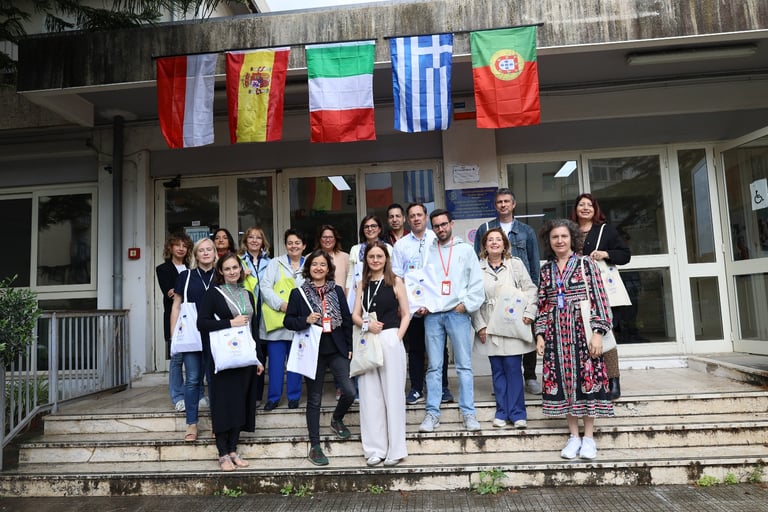
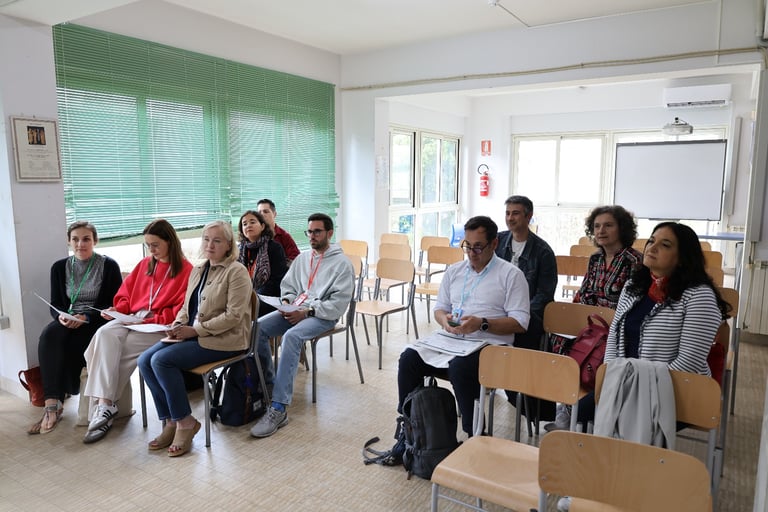
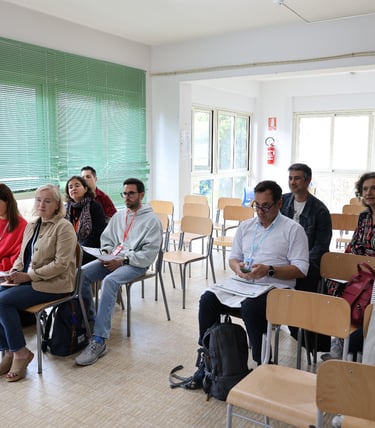
During this Erasmus+ training course, participants explored the pedagogical potential of Artificial Intelligence and digital tools in education, with a focus on innovation, inclusion, digital responsibility, and alignment with the European DigCompEdu framework. The course combined theoretical input, hands-on practice, collaborative work, and critical reflection on ethical and privacy issues.
Day 2 – AI for Lesson Planning, Assessment and Media Creation
Use of AI tools for lesson planning and differentiated instruction.
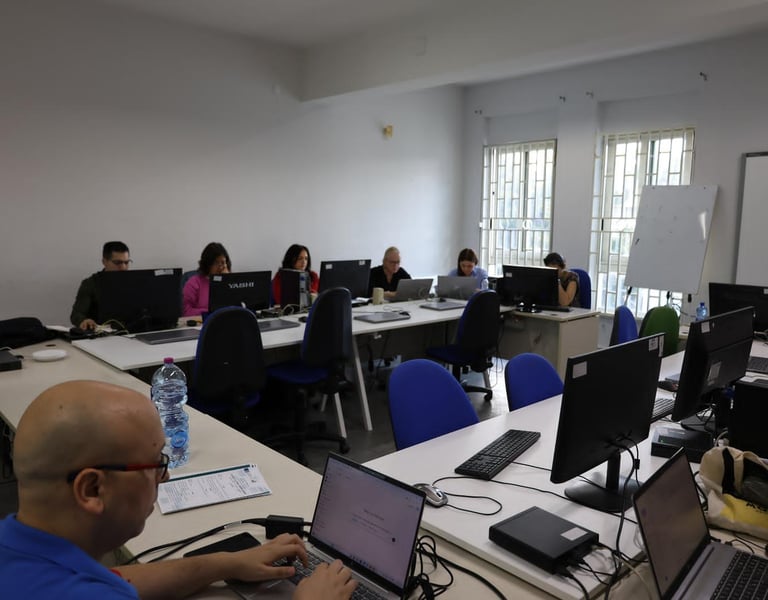
Practical work with Magic School AI to create assignments, rubrics, and personalized learning activities.
Exploration of formative assessment strategies using Kahoot and AI-generated quizzes.
Critical analysis of bias and limitations in AI systems, especially chatbots and generative models.
Discussion of AI-driven personalization to address diverse learners’ needs.
Introduction to AI tools for media creation, including Suno AI for generative music.
Exploration of text-to-video technologies such as OpenAI SORA and creation of simple video projects from prompts.
Day 3 – AI Integration Across Subjects and Inclusive Education
Development of critical thinking skills through the use of AI in educational contexts.
Integration of AI and digital tools across different subjects, with a focus on STEM and coding.
Use of drag-and-drop programming tools and Photomath for problem-solving activities.
Introduction to MIT App Inventor and creation of simple educational applications.
Design of educational chatbots using Dialogflow and no-code tools.
Collaborative group work to design inclusive and personalized lesson plans supported by AI tools.
Focus on DigCompEdu Areas 3 and 5 (Teaching and Learning, Empowering Learners).
Group challenge: “Design Your AI Lesson”, with presentation of lesson plans integrating AI and inclusive strategies.
Day 4 – Strategic Planning, Digital Citizenship and Future Perspectives
Exploration of AI tools to support teachers’ work, such as Ignite Copilot.
Introduction to responsible AI adoption frameworks and checklists inspired by DigCompEdu.
Discussion of models and guidelines for developing AI policies in schools.
Reflection on the evolving role of teachers in AI-augmented education.
Practical lab sessions for lesson planning using ChatGPT, Gemini, Copilot and Claude.
Development of a personalized AI Action Plan for participants’ schools.
Debate on digital citizenship topics: AI, surveillance, netiquette, dark patterns and student data.
Workshop on evaluating educational AI platforms from ethical and privacy perspectives.
Overview of integrated digital tools used during the course (Magic School AI, Kahoot, Duolingo, Photomath, Scratch, Suno AI, generative chatbots).
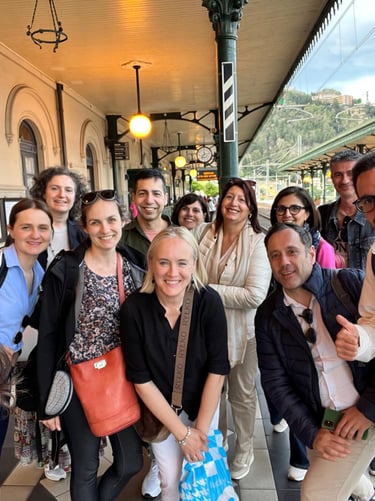
Learning outcomes
Acquired practical experience in using AI tools aligned with the DigCompEdu framework.
Developed skills to design inclusive, personalized and innovative learning activities.
Strengthened critical awareness of ethical, legal and privacy issues related to AI.
Improved their digital teaching competence and confidence in integrating AI into educational practice.
Created an actionable plan for the responsible integration of AI in their schools.
Contact with us
ourbeautyfullworld@gmail.com
© 2025. All rights reserved.